A compound can bind its intended target and still be a poor candidate if it also binds a protein it should avoid.
This is especially relevant when the desired target and off-target contain structurally similar binding regions. A favorable docking score against the intended protein provides useful information, but it does not show whether the compound is predicted to prefer that protein over a related alternative.
Counter-screening adds this comparison earlier in the discovery workflow. Instead of ranking compounds against one protein in isolation, the same ligand library is evaluated against both the desired target and a selected off-target.
The objective is not to prove biological selectivity computationally. It is to identify compounds with a more credible cross-receptor profile for further modeling and experimental evaluation
Preparing the target and off-target proteins
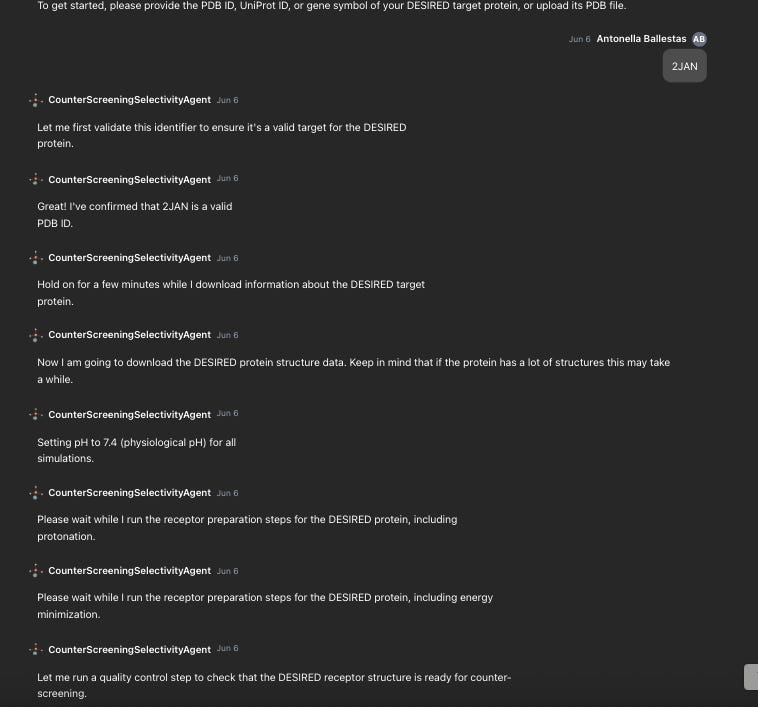
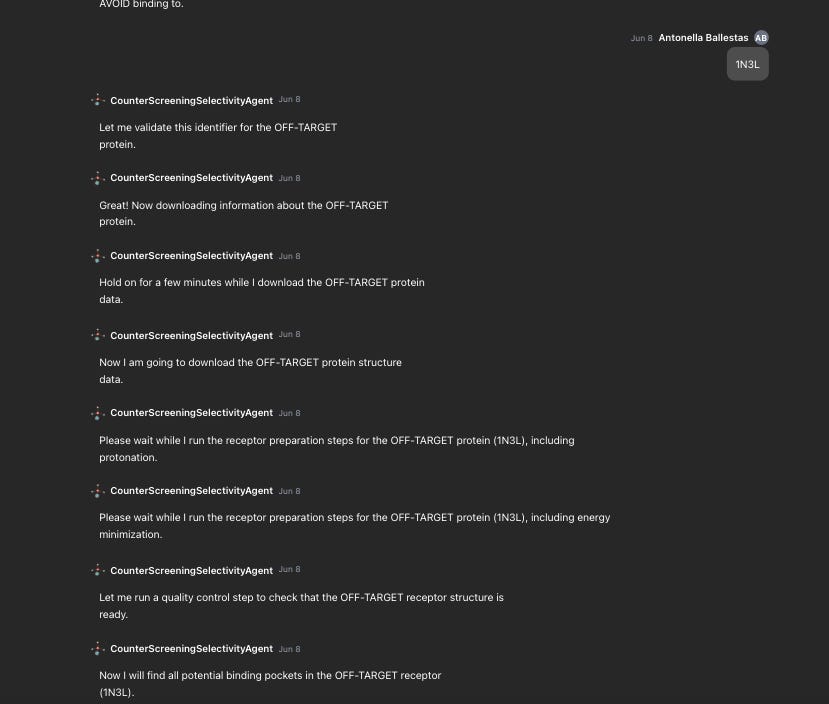
In this project, PDB 2JAN was used as the desired target structure, while PDB 1N3L was selected as the off-target structure.
This pair was chosen to evaluate whether compounds predicted to bind the desired protein could avoid a related protein containing a comparable binding region.
The Counter-Screening Selectivity Agent first validates each PDB identifier and retrieves the available structural information. Both proteins are then processed through a consistent preparation workflow that includes protonation at physiological pH, energy minimization and structural quality control.
Using the same preparation procedure for both structures reduces inconsistencies that could otherwise affect the comparison. Differences in protonation, missing atoms or receptor treatment can influence docking scores independently of the underlying protein–ligand interactions.
Figure 1-2. Consistent preparation of the desired target 2JAN and off-target 1N3L before cross-receptor screening.
Identifying the binding sites
Once the desired target protein has been prepared, the agent identifies potential binding pockets across its structure.
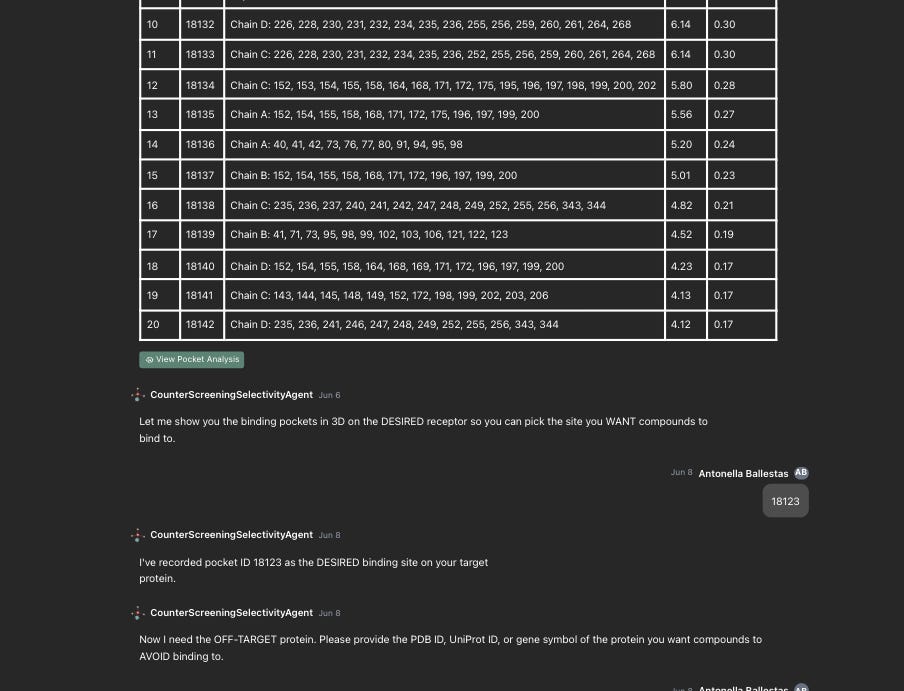
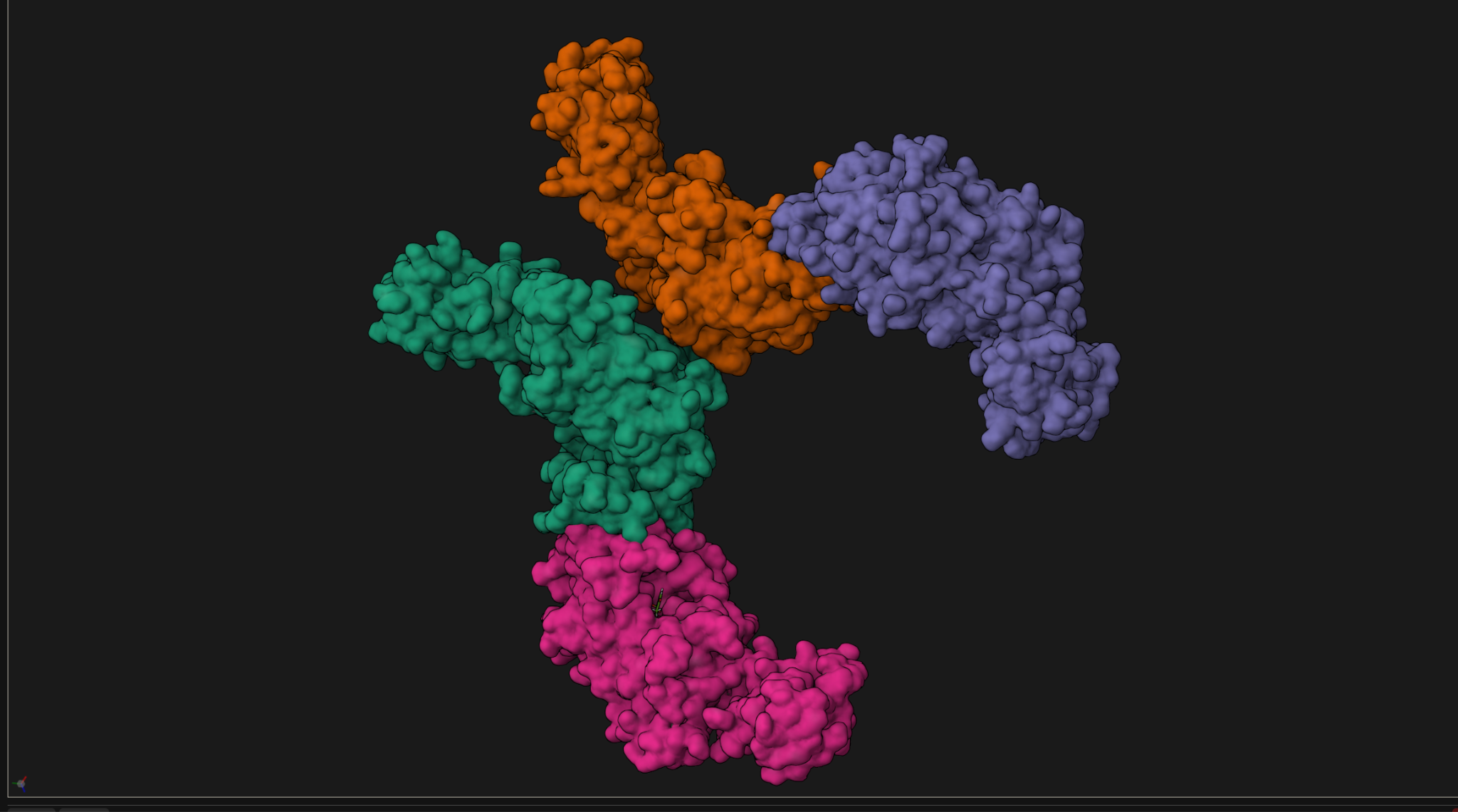
Each predicted site is presented with information about its position, associated residues, pocket score and predicted probability. Researchers can review these results before selecting the region where compounds should bind.
In this run, Autochem pocket ID 18123 was selected as the desired binding site.
The off-target protein is prepared and analyzed using the same process. Autochem pocket ID 18024 was selected as the region compounds should avoid.
Counter-screening results are most interpretable when the selected sites represent biologically relevant and structurally comparable regions of the two proteins
Figure 3. Selection of Autochem pocket ID 18123 as the desired binding site before defining the off-target protein.
Running cross-receptor counter-screening
Once both sites have been defined, the agent performs three central operations:
It docks the ligand library against the desired target pocket.
It docks the same compounds against the off-target pocket.
It ranks the compounds using the relationship between both docking results.
A strong target score alone does not necessarily identify the most useful compound. A molecule may bind favorably to the desired target while receiving a similarly favorable score against the off-target.
Higher-priority candidates are those that combine favorable predicted target binding with weaker predicted off-target binding and a meaningful separation between the two scores.
Interpreting the selectivity score
In this workflow, a lower docking score represents stronger predicted binding.
The selectivity score is calculated from the difference between the off-target and target docking scores:
A larger positive value represents a more favorable computational selectivity profile. It indicates that the compound received a stronger predicted binding score against the desired target and a weaker score against the off-target.
For example, the first compound shown in the results received:
Target score: −8.846 kcal/mol
Off-target score: −7.978 kcal/mol
Selectivity score: 0.868
Reviewing poses and interactions
Docking scores help rank compounds, but they do not explain the structural basis of the result.
The predicted target and off-target poses can therefore be reviewed side by side. This comparison may reveal whether the ligand adopts different orientations, occupies different regions of the pocket or loses favorable contacts in the off-target.
In this run, protein–ligand interaction analysis was used to characterize the predicted binding mode at the desired target. Proposed hydrogen bonds, hydrophobic contacts and interactions with surrounding residues can help determine whether the pose supports a plausible binding hypothesis.
A compound may receive a favorable selectivity score but still adopt an unrealistic pose. Structural interpretation remains necessary before treating the ranking as a credible shortlist.
3D TARGET
3D OFF TARGET
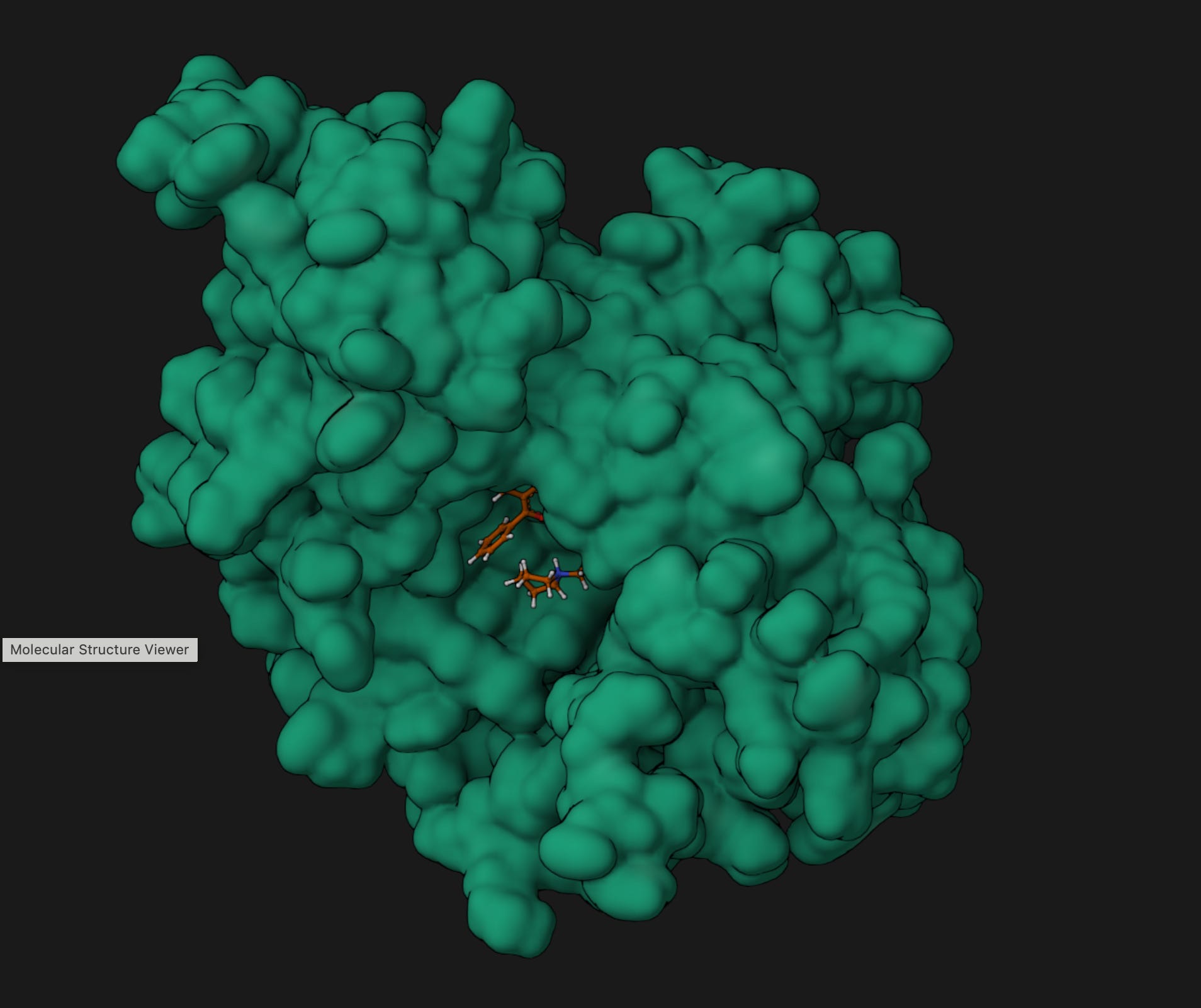
Figure 4-5. Side-by-side visualization of the same compound in the desired target and off-target helps identify interactions that may contribute to predicted selectivity.
Checking pose quality
Autochem also uses PoseBusters to assess whether the docked structures satisfy structural and chemical quality checks.
Some predicted poses in this run were marked as Failed because they did not satisfy one or more PoseBusters tests. This does not mean that the compounds failed experimentally. It indicates that the corresponding docking poses should not be accepted without further inspection.
A stronger computational shortlist combines favorable target binding, weaker off-target binding, a meaningful selectivity difference, plausible interactions and acceptable pose quality.
What the results can and cannot show
Cross-receptor docking does not prove biological selectivity, affinity, toxicity or therapeutic safety. The results depend on the selected structures, pockets, ligand preparation and scoring method.
Its value lies in helping teams identify possible off-target liabilities, compare structural hypotheses and determine which compounds warrant additional modeling or experimental testing.
Selectivity is not defined only by how strongly a compound binds one protein. It depends on how that compound behaves across the proteins that matter. Counter-screening helps move from an affinity-only ranking toward a more informed and testable selectivity hypothesis.
Thanks for reading Pauling AI Blog! Subscribe for free to receive new posts and support my work.